
OOC: The Playable Anime
OOCBooks & Reference
4.34.45K Reviews
- Version
- 0.1.27
- Installs
- 1.00M
- Age Rating
- Teen
Screenshots

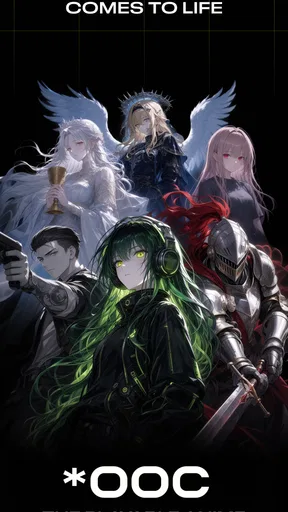
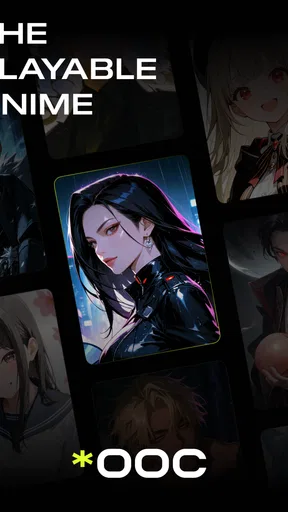
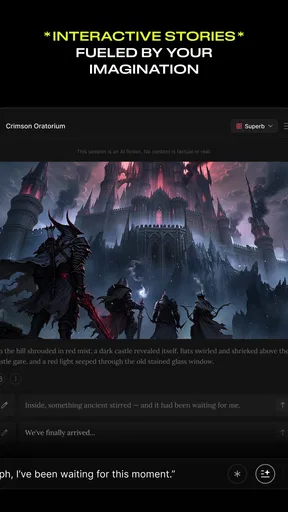
Our Review of OOC: The Playable Anime
 Analysis by Appyee
I approached OOC: The Playable Anime expecting something closer to a conventional reading app with an anime theme. That turned out to be the wrong frame. The central idea is that the story is meant to respond to the reader’s imagination, so the experience sits somewhere between an interactive novel and a personal anime-inspired reading session. That single capability shapes almost everything: the appeal, the pace, the amount of attention it demands, and the reasons someone might eventually prefer a more traditional book app.
OOC is a free Books & Reference app from OOC, rated for Teen users. It has reached over a million installs and holds a 4.3 average from roughly nineteen thousand ratings, with about three thousand two hundred written reviews. Those figures suggest that the concept is understandable enough to attract a broad audience, but the experience itself is more specific than a normal digital library. I would recommend it most readily to readers who enjoy making choices, filling in imaginative gaps, and treating fiction as something they participate in rather than simply consume.
Why the imagination-driven format matters
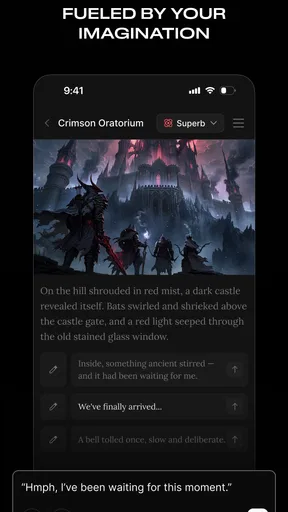
The most important feature is not a large catalog, a complicated interface, or a collection of reading tools. It is the way the app asks me to bring my own imagination into the story. Instead of presenting anime as a finished visual product, it leaves room for the reader to picture scenes, characters, moods, and consequences personally. That creates a different relationship with the material than watching an episode, where every face, movement, voice, and camera angle has already been decided.
In practice, this means the app works best when I am willing to slow down and mentally stage what I am reading. I am not only following words on a screen. I am deciding how a scene feels in my head, what a character might look like, and how dramatic or understated a moment should be. The result can feel surprisingly personal, especially for readers who already enjoy anime but sometimes find that a fixed adaptation leaves little space for their own interpretation.
The real strength is creative participation, not passive reading. That distinction is useful before downloading it. If I want a polished anime episode that I can watch while doing something else, this is not the same kind of entertainment. If I want a novel that gives me room to imagine and react, the format has a much stronger chance of working.
Reading with an active imagination
Many interactive stories advertise choice, but the interesting part here is broader than simply tapping through a menu. The app’s premise encourages me to treat imagination itself as part of the interaction. Even when the text is doing the storytelling, my mental version of the scene becomes an important layer of the experience.
That makes the app especially appealing after watching anime with a strong visual identity. I can carry familiar expectations about pacing, character energy, and dramatic timing into the reading session without being forced to copy one official visual interpretation. At the same time, someone who does not already follow anime can approach it as an imaginative reading experiment rather than needing extensive background knowledge.
There is also a useful difference between this and ordinary novels. A standard novel may invite visualization, but it usually does not present that invitation as the defining interaction. OOC makes the reader more conscious of the process. For me, that can make a short session feel more absorbing, although it also means the app is less suitable when I am tired or looking for effortless distraction.
What using it feels like in an ordinary session
I found the best way to approach OOC is to give it focused attention instead of treating it like a background activity. I would begin with a quiet stretch of time, read until the scene had a clear emotional direction, and then pause briefly to let the imagined setting settle. That small change in habit matters. Rushing through the text makes the experience feel like a normal reading app, while giving each scene a little room makes the interactive premise more noticeable.
A realistic use case is a short evening session after work or school. Rather than opening a video platform and committing to an episode, I could spend a few minutes with the novel, build the scene in my head, and stop at a natural point. This works well when I want something more engaging than scrolling but less demanding than a long game. The format also suits a phone because it does not require a large screen to make the central idea work; the screen provides the words, while the imagination supplies much of the atmosphere.
Another useful situation is reading during a commute, provided the environment is not too distracting. The app can turn a familiar journey into a private story space, but interruptions have a bigger effect here than they would with a simple reference article. Missing a paragraph does not only mean missing information; it can break the mental image that has been forming. I would therefore use it on a commute when I can read comfortably, not when I am constantly checking stops or dealing with noise.
A practical workflow for getting more from it
My first tip is to avoid trying to force a complete visual picture immediately. I get more from the experience when I start with one strong detail, such as the atmosphere of a location or the emotional tone of a character, and allow the rest to develop naturally. This reduces the pressure to “perform” imagination and keeps the reading fluid.
A second tip is to pause at transitions rather than after every paragraph. Stopping too often can make the story feel mechanical, while never pausing can flatten the imaginative side into ordinary scrolling. Scene changes, emotional turns, and moments that imply a different setting are the most useful points to let the mental version of the story catch up.
I also recommend separating the app from visual reference material during the first reading. Looking up images while reading may seem helpful, but it can replace the personal interpretation that makes this format distinctive. If I later want to compare my mental version with anime artwork or other references, that is more rewarding after I have formed my own impression.
These habits are not required rules, and the app does not become unusable without them. They simply reveal the difference between opening it as another content feed and using it as an imagination-led reading experience. The more deliberately I read, the more clearly its main capability comes through.
Where the format works best
The strongest scenario is a reader who likes anime storytelling but wants more personal involvement than watching provides. Someone who enjoys inventing character voices, imagining settings, or wondering how a scene might look from another angle will probably understand the appeal quickly. The app can also suit readers who are curious about interactive fiction but do not necessarily want the complexity of a full role-playing game.
I think it is particularly effective for short, repeatable sessions. A person might open it during a break, read a section, and return later without needing to prepare equipment or learn a large control system. The free entry point makes that experimentation easier: there is no purchase barrier to discovering whether the imagination-driven approach matches personal taste.
It can also be a good alternative for someone who has become tired of watching the same kind of anime content. Streaming offers polished visuals and sound, but it also fixes the presentation. OOC shifts some responsibility back to the reader. That can make familiar themes feel more intimate, although the payoff depends heavily on how much creative space the text leaves and how willing the reader is to use it.
When a traditional alternative is better
I would choose a conventional e-book reader instead if my priority were efficient reading, adjustable text presentation, or working through a long nonfiction title. Books and reference apps are usually judged by how easily they help users find, organize, and revisit information. OOC is not compelling for those tasks because its value is experiential rather than archival.
I would also choose a standard anime streaming service when I wanted immediate visual spectacle, voice acting, or a fixed pace. Watching removes the effort of constructing the scene and can be much more relaxing after a long day. OOC asks me to contribute attention, so calling it a replacement for anime video would set the wrong expectation.
For readers who prefer conventional novels with fully described worlds, the app may feel underpowered or too open-ended. The same imaginative freedom that excites one person can feel like extra work to another. If I want the author’s exact visual and emotional direction, I am better served by a traditional novel or a finished screen adaptation.
The tradeoffs behind the creative freedom
The biggest tradeoff is that the app’s defining strength depends on the user. A highly visual reader may find the experience absorbing, while someone who wants the application to supply every detail may feel that too much is left to personal interpretation. This is not a flaw that can be solved by a faster interface; it is built into the concept.
Pacing is another consideration. In a video, the production controls the rhythm. In OOC, my attention controls more of it. I can linger on a scene, skim through a passage, or lose the mood entirely if I become distracted. That flexibility is valuable, but it also makes the experience less consistent from one session to another.
The Teen content rating is worth keeping in mind for families. I would not treat the label as a substitute for a parent’s judgment about a particular reader. Teen users may be the intended audience for the anime-novel style, but suitability still depends on individual sensitivity and the context in which the app is being used.
The free price is helpful for trying the concept, though the app includes in-app purchases ranging from $1.39 to $142.99 per item. That wide range makes it sensible to pay attention before confirming any optional purchase, especially if the phone is shared with younger users. I would begin with the free experience and only consider spending after deciding that the format genuinely fits my reading habits.
There is also a version detail that matters for compatibility. The current version is 0.1.17 and requires Android 7.0 or later. That is a relatively accessible requirement for many Android phones, but anyone using an older device should check compatibility before planning around the app. Since this is an Android app, iPhone users should not assume that the same installation experience applies to iOS.
What the public reception tells me—and what it does not
The app’s 4.3 average and large install base make it easier for me to take the concept seriously rather than dismissing it as an experiment with no audience. The written feedback total, around three thousand two hundred reviews, also indicates that many users have taken the time to describe their experience. Still, popularity cannot tell me whether an imagination-first format will suit my personal reading style.
That is why I would treat the rating as a reason to try OOC, not as proof that it is universally better than books, games, or anime video. A reader who wants active participation may rate it highly for exactly the same qualities that frustrate someone seeking a passive story. The app’s reception supports its legitimacy, but the central decision remains personal.
Who gets the most from OOC
The best match is someone who enjoys anime aesthetics and interactive fiction but does not need a conventional game loop. This reader is comfortable making mental choices about presentation and does not mind that imagination is part of the work. They may also appreciate a story app that can be used in small sessions without requiring the commitment of a full game or a long streaming episode.
It is also a good fit for readers who like discussing “what I pictured” after a story. Because the app does not lock every visual detail into one screen adaptation, two people can read the same material and focus on different impressions. That makes it more interesting for a shared reading conversation than a purely visual episode whose major images are already fixed.
I would be more cautious recommending it to someone who reads mainly for information, wants a large reference collection, or dislikes stories that ask for interpretation. It is not the app I would open to look up a fact, annotate a technical book, or relax without concentrating. Its category may be Books & Reference, but its practical identity is much closer to imaginative entertainment.
One final consideration is patience. The app comes from OOC and is still presented with a low version number, so I would approach it as a focused experience rather than expecting the breadth and maturity of a long-established reading platform. That does not undermine the core idea, but it does make expectations important: I would judge it by how effectively it turns reading into personal participation, not by whether it replaces every other way of enjoying stories.
After spending time with it, my recommendation is straightforward. Try OOC if the phrase “anime that I help imagine” sounds more appealing than “anime that simply plays.” Start with a free session, read somewhere quiet, and give the scenes enough space to form before deciding. If you want fiction to leave room for your own mental picture, this app has a clear reason to exist. If you want finished visuals, effortless pacing, or a practical digital library, a traditional alternative will serve you better.
For me, the app succeeds because it commits to one memorable idea instead of pretending to be every kind of reading tool at once. The experience is not universally convenient, and its optional purchases deserve care, but the imagination-driven approach gives it a distinct place between an anime adaptation and an interactive novel. That makes it worth trying for the right reader, especially someone who wants to feel that reading is an act of creation rather than only an act of consumption.
Privacy and Permissions
See what permissions an app requests and how it handles your data.
- Photos/Media/Files
- read the contents of your USB storage, modify or delete the contents of your USB storage
- Storage
- read the contents of your USB storage, modify or delete the contents of your USB storage
- Wi-Fi connection information
- view Wi-Fi connections
- Other
- view network connections, full network access, control vibration, prevent device from sleeping
Verdict
Strengths of OOC: The Playable Anime
- Stylish anime visuals give battles a distinctive and polished look.
- Playable characters offer varied abilities and combat approaches.
- Short sessions make it convenient for quick mobile gaming breaks.
- The anime-inspired presentation creates a strong atmosphere for fans.
- Frequent combat decisions keep encounters more engaging than simple tapping.
Limitations of OOC: The Playable Anime
- Some progression systems may feel slow without regular play.
- The interface can appear crowded on smaller phone screens.
- Combat may become repetitive after extended sessions.
- New players may need time to understand every available system.
- Performance can vary between older and newer mobile devices.
Similar Picks in This Category
View All
Google Play Books & Audiobooks
Google LLC4.7

네이버 - NAVER
NAVER Corp.3.5

Wattpad - Read & Write Stories
Wattpad.com3.7

King James Bible - Verse+Audio
Ozion4.8

Bible Offline-KJV Holy Bible
Bíblia Offline4.9

Amazon Kindle: Reading App
Amazon Mobile LLC4.8
Frequently Asked Questions
What is OOC: The Playable Anime?
OOC: The Playable Anime is an interactive entertainment experience that combines anime-style presentation with playable content. Rather than simply watching episodes, users can take part in the story through gameplay, character interactions, and progression. Its appeal comes from blending cinematic scenes and visual storytelling with hands-on participation, making it suitable for players who enjoy anime-inspired worlds but also want more control over what happens.
Is OOC: The Playable Anime free to download and play?
The application may be available to download at no initial cost, but users should check the current store listing before installing because pricing models can change. Some content may be supported by advertisements, optional purchases, or premium access. It is also worth reviewing the in-app purchase information, especially if children will use the app, since additional characters, features, or progression items may not be included in the free version.
Does OOC: The Playable Anime require an internet connection?
An internet connection may be needed for downloading the application, receiving updates, loading online content, synchronizing progress, or accessing certain interactive features. Depending on the version, some parts of the experience could work offline after installation, while other functions may stop working without connectivity. Before traveling or using mobile data, users should test the app offline and check whether updates or extra downloads are required.
What devices are compatible with OOC: The Playable Anime?
Compatibility depends on the operating system, device model, available storage, and software version supported by the developer. Users should confirm the requirements on the official Google Play or App Store page before downloading. Because anime-focused interactive applications can include high-quality graphics, older phones or tablets may experience slower loading, reduced performance, overheating, or limited access to some visual features even when the app installs successfully.
Is OOC: The Playable Anime suitable for children and safe to use?
Parents should review the official age rating and privacy information before allowing children to use OOC: The Playable Anime. Anime-themed content can include mature dialogue, dramatic situations, combat, romance, or other subjects that may not be appropriate for every age group. Users should also check whether the app contains advertising, chat features, external links, or in-app purchases, and activate device-level parental controls when necessary.
